Display Case
A deliberate test of Blender MCP and Claude — and a jewelry render pushed from product shot to retail room.
Design / Preproduction
- Figma
CAD / 3D
- Blender 5.2 LTS
- Cycles
- Geometry Nodes
- Python (bpy)
AI Orchestration
- Claude
- MCP
Infrastructure
- Google Sheets
- iTunes Search API
- MusicBrainz
- Cover Art Archive
Engineering challenge
A jewelry render fails where the viewer already knows the answer: how silver oxidises in a recess, what glass and a mirror pick up from a room, and whether the objects on the shelves are things a person would own. Any one wrong and the frame reads as CG at any sample count.
Each solved against a real reference. The HDRI was measured rather than trusted by name, and the daylight rebuilt around what it actually contributes. Silver runs a warm sterling base against near-black patina, both driven by baked cavity so oxidation sits in the recesses. Low-iron glass and the mirror were built to real product specs. The set dressing is real artwork — covers pulled by API, jackets built from scans.
LLM orchestration
Claude drove a live Blender session over an MCP bridge — reading scene state through bpy, applying changes in place, and firing and measuring renders in the same loop. Creative judgment stayed with the artist; diagnosis, measurement and implementation ran in-session.
- mcp-server
- agent-workflow
- script-generation
- structured-extraction
- semi-autonomous
Human in the loop: Nothing was written to disk. The .blend stayed unsaved by design, so every change remained the artist's to keep or discard, and original values were captured before each change rather than after. Two proposed fixes were declined with the measurements that ruled them out.
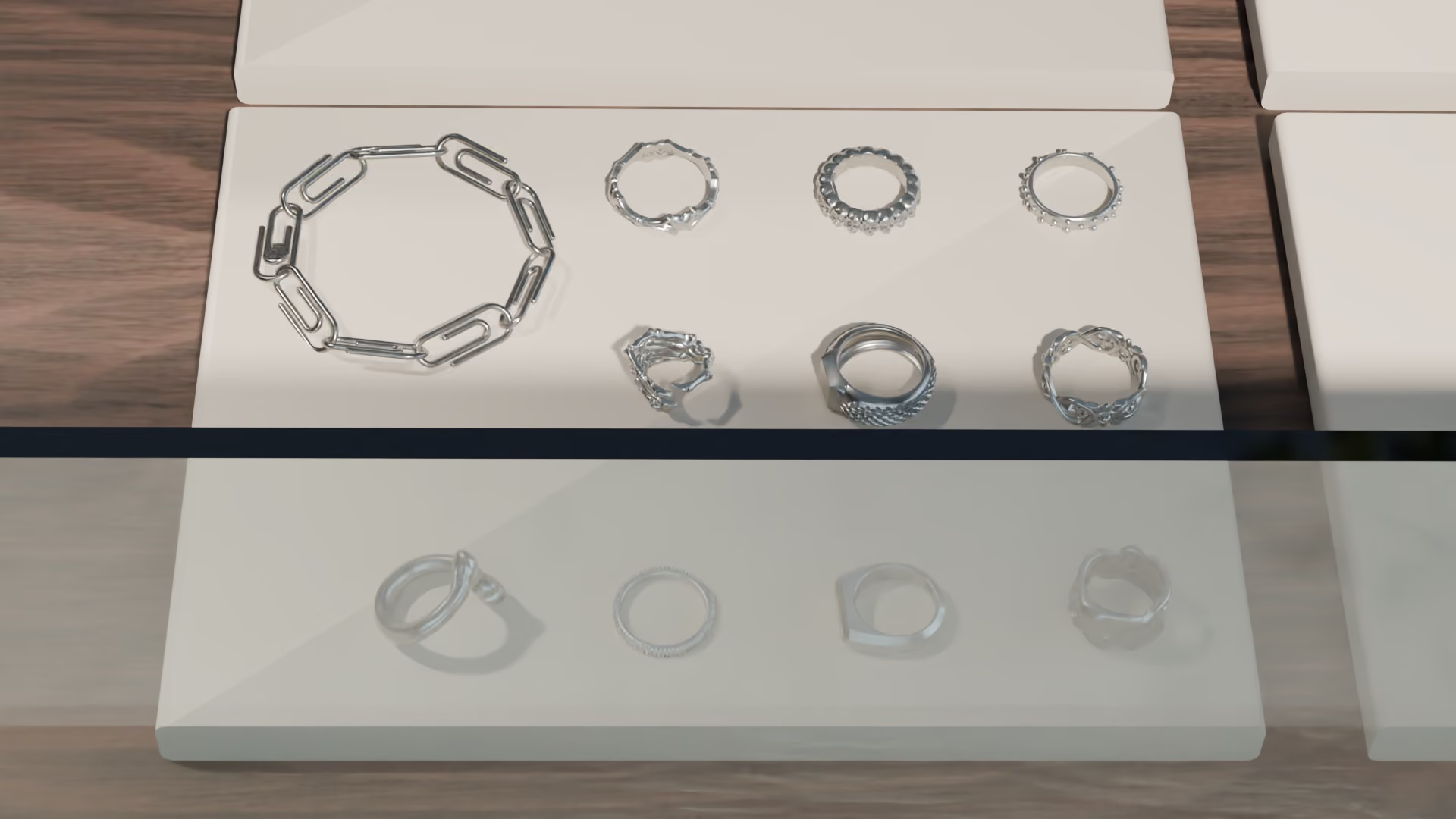
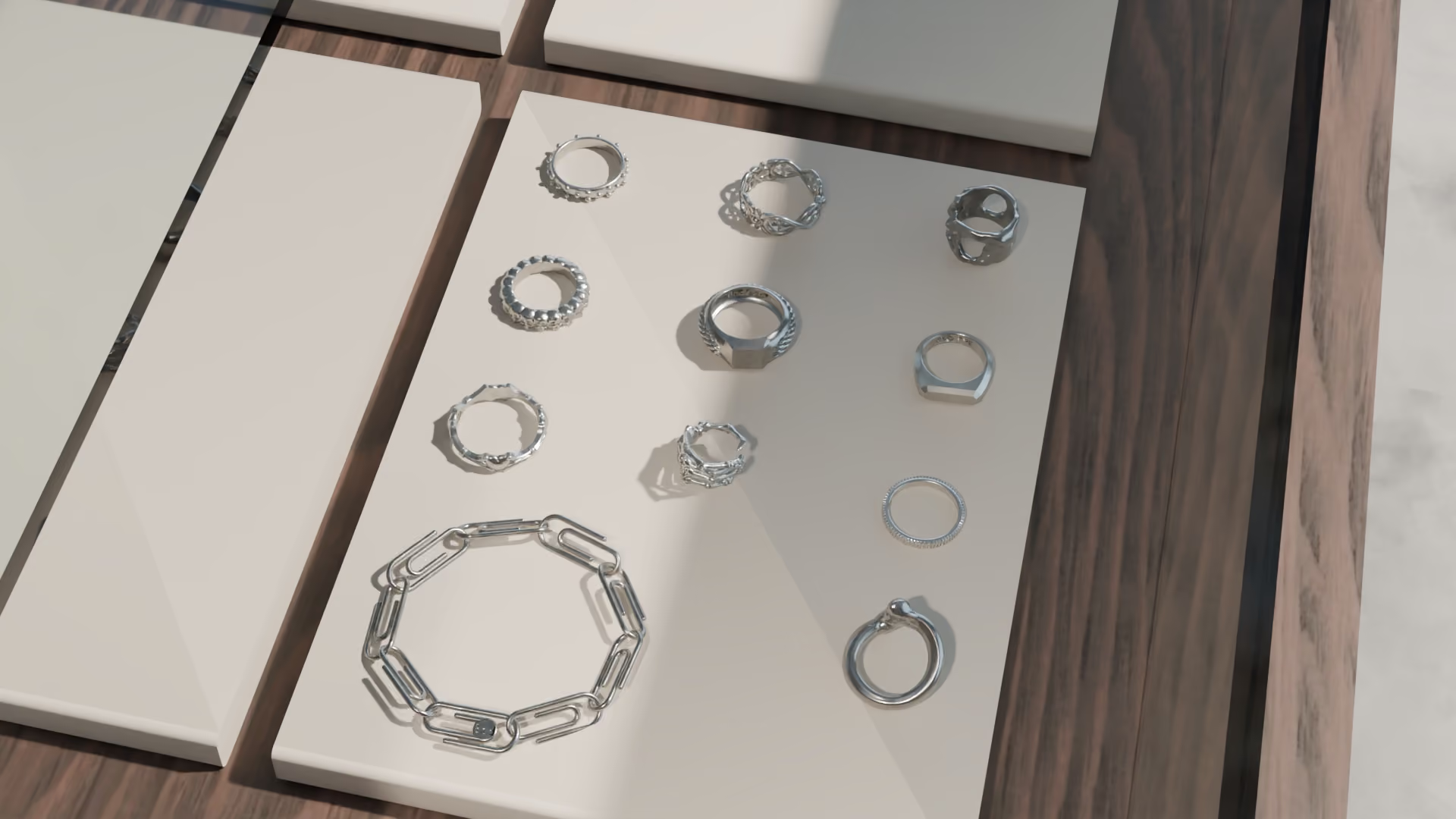
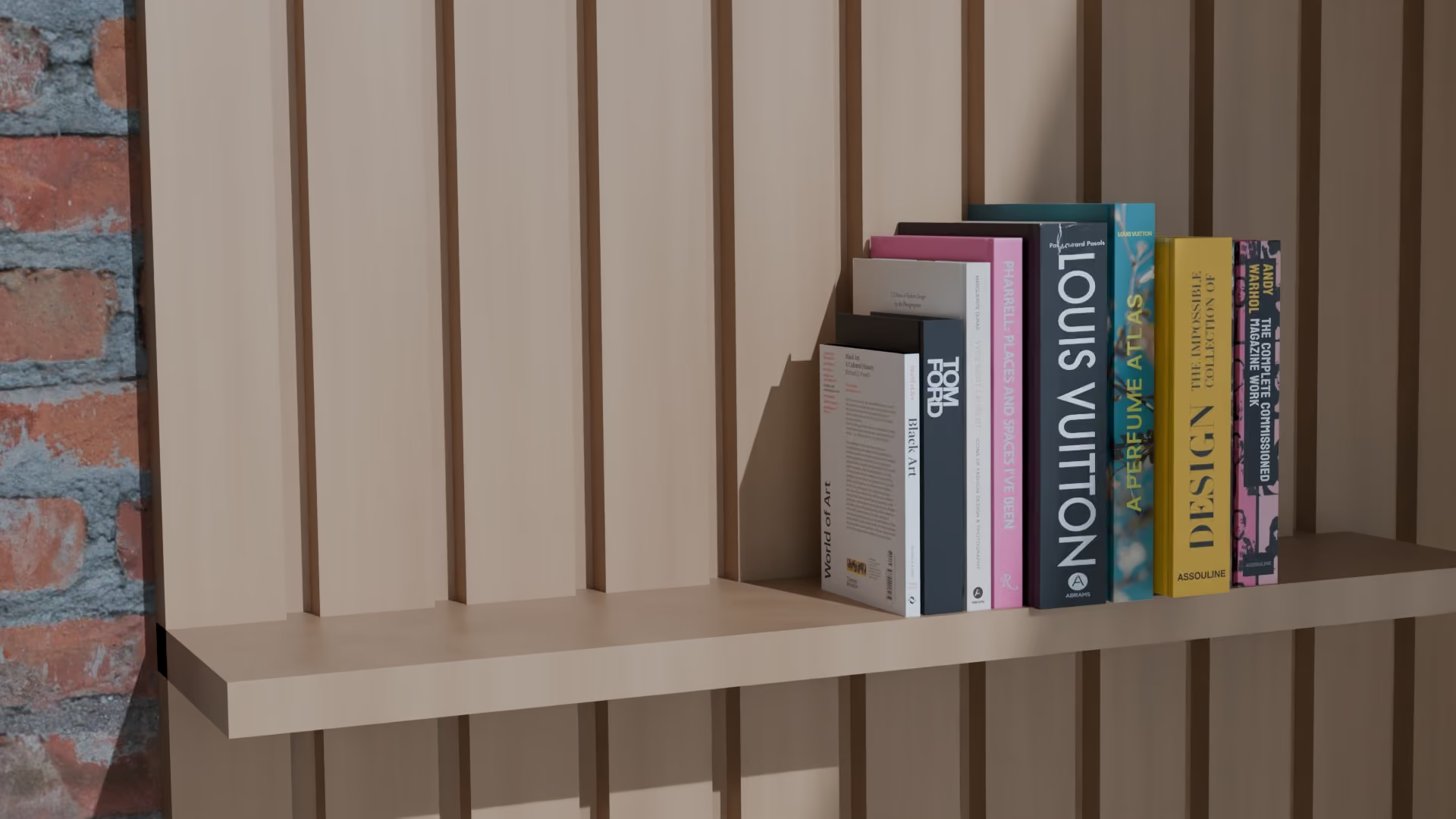
A jewelry vitrine, staged from a bare case on a wood floor into a furnished retail room: 15 books, 9 records, a bench, a leaning mirror, a slat wall, and eleven pieces of jewelry on the pad. Blender 5.2 LTS, Cycles, 1080 × 1920.
Why this scene
A real test of Blender MCP + Claude — not a demo prompt, but a scene I cared about, with enough surface area to find the edges: procedural geometry, shader debugging, physical lighting, asset sourcing, camera animation.
And a step up in production value. My previous renders drew more interest than I expected, so the next move was putting the pieces in a place rather than on a plinth. A retail room needs set dressing — a volume of asset work that normally decides against itself.
It all ran against a live Blender session over an MCP bridge — scene state
read through bpy, changes applied in place, renders fired and measured in the
same loop.
Direction in, evidence out
Making it read as real
A jewelry render gets judged on things the viewer already knows by heart. Four of them decided this frame.
The light. The HDRI was measured, not trusted — linearized it sits at xy (0.3147, 0.3276), essentially D65. That ruled the environment out as the source of a warm cast and pointed at the storefront daylight instead: two 7000 K panels outside the windows contributing nothing. Rebuilding around what each source actually contributes took the pad from R/B 1.303 to 1.009.
Silver that oxidises where silver oxidises. A warm sterling base rather than neutral chrome — chrome is the fastest way to make a ring look rendered — against a near-black patina, roughness on the same mask at 0.10 polished and 0.66 oxidised. The mask is baked cavity data, so darkening sits in the recesses.
Glass and mirror that reflect a real room. Low-iron glass, chosen because it doesn’t tint what passes through it, and the mirror built to real HOVET dimensions. Their job is to carry the brick, the slat wall, the storefront light — get the spec wrong and they reflect something subtly invented.
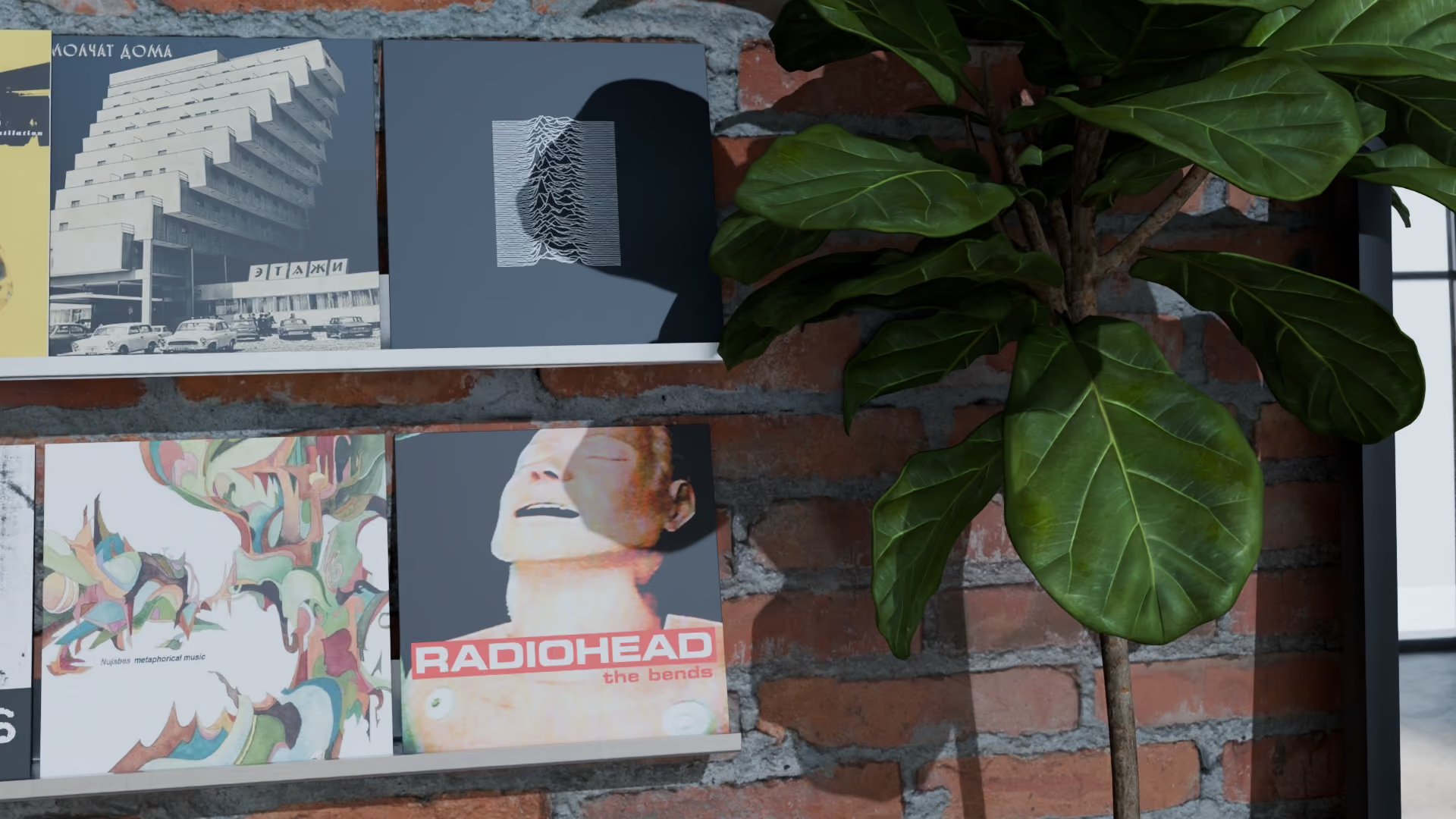
Set dressing a person would own. This carries the vibe and can’t be faked with generic props. The records are real releases with real cover art, pulled by API, with non-square covers padded rather than centre-cropped. The ledges sit at 1499.5 mm, standing eye level.
Automating the book library
Fifteen books is where a scene like this normally stops being worth it, so the pipeline runs from a spreadsheet instead of by hand.
A Google Sheet is the manifest. One row per book carries dimensions, artwork and shelf position, and drives geometry, materials, textures and packing — so adding a title is editing a row, not modelling an object. One limitation worth knowing: the Sheets connector can’t write cells at all, so computed results land in a CSV alongside rather than back in the sheet.
Proportions come from the artwork, laid out through the Figma MCP. A detector finds the spine folds in a flat scan; one real measurement fixes the scale. It scored 0 px error on two books whose answer was known — then returned a confident 2.2 mm spine on a 235 mm book whose cover is black edge to edge, with no luminance edge to find. The guards that came out of that later caught a second all-black cover doing the same thing. The wrap templates themselves are published into Figma through the MCP, a frame per book with guides measured off the built mesh rather than calculated.
What the test showed
Reading the live scene is the whole advantage. Black glass turned out to be two panes matching to four decimal places. That isn’t visible in a render — only in the scene graph.
The bottleneck is verification, not generation. Building a shader or a generator was the fast part. What made the output trustworthy was measuring it.
Label things properly. A datablock still called Clothing store pink warm light long after that environment was swapped out sent the first lighting
diagnosis in the wrong direction. Names are the cheapest documentation a scene
file has, and they only stay useful if they’re updated when the thing behind
them changes.
The set-dressing volume became affordable — the week of asset work that would otherwise have talked me out of the shot.